Team building with personality profiles that works
A project meeting rarely reveals how a team truly works. People have time to prepare, familiar voices tend to lead and quieter colleagues can disappear behind the agenda. Team building with personality profiles creates a more useful picture when it moves beyond theory and lets people experience their habits in action – especially when the pressure is real, the task is shared and the clock is running.
For HR, L&D and operational leaders, the value is not in assigning people a colour, type or label. It is in giving teams a practical language for the behaviours that shape performance: who drives decisions, who tests assumptions, who keeps everyone connected and who needs more space to process before contributing. Used well, personality insight helps people flex their behavioural styles rather than expect everyone else to work exactly as they do.
Why personality profiles change team conversations
Most workplace friction is not caused by bad intent. It comes from different preferences colliding without being named. One colleague may see fast decisions as momentum; another may see them as avoidable risk. One may be energised by lively debate, while another needs a moment to consider the evidence before speaking. Neither approach is automatically right. The problem begins when each person assumes their preferred approach is the only professional one.
Personality profiles give teams a neutral starting point for discussing those differences. Rather than saying, “You always dominate the conversation,” a colleague can say, “When the pace rises, I need more room to test the detail before we commit.” That shift matters. It turns criticism into a conversation about conditions for better work.
The strongest programmes focus on behavioural preferences, not fixed identities. Profiles should help people notice patterns, not excuse unhelpful conduct or place limits on capability. A detail-focused employee can lead decisively. A naturally direct manager can learn to listen. A reflective colleague can thrive in high-pressure situations with the right preparation and role clarity. The aim is flexibility: recognising what you default to, understanding the impact on others and choosing a more effective response when the situation demands it.
Team building with personality profiles needs live experience
A profile report can prompt useful reflection, but reading about behaviour is not the same as seeing it under pressure. Teams often agree with development ideas in a workshop, then return to familiar habits by Monday morning. A live challenge makes those habits visible.
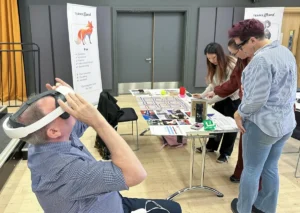
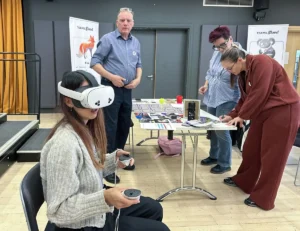
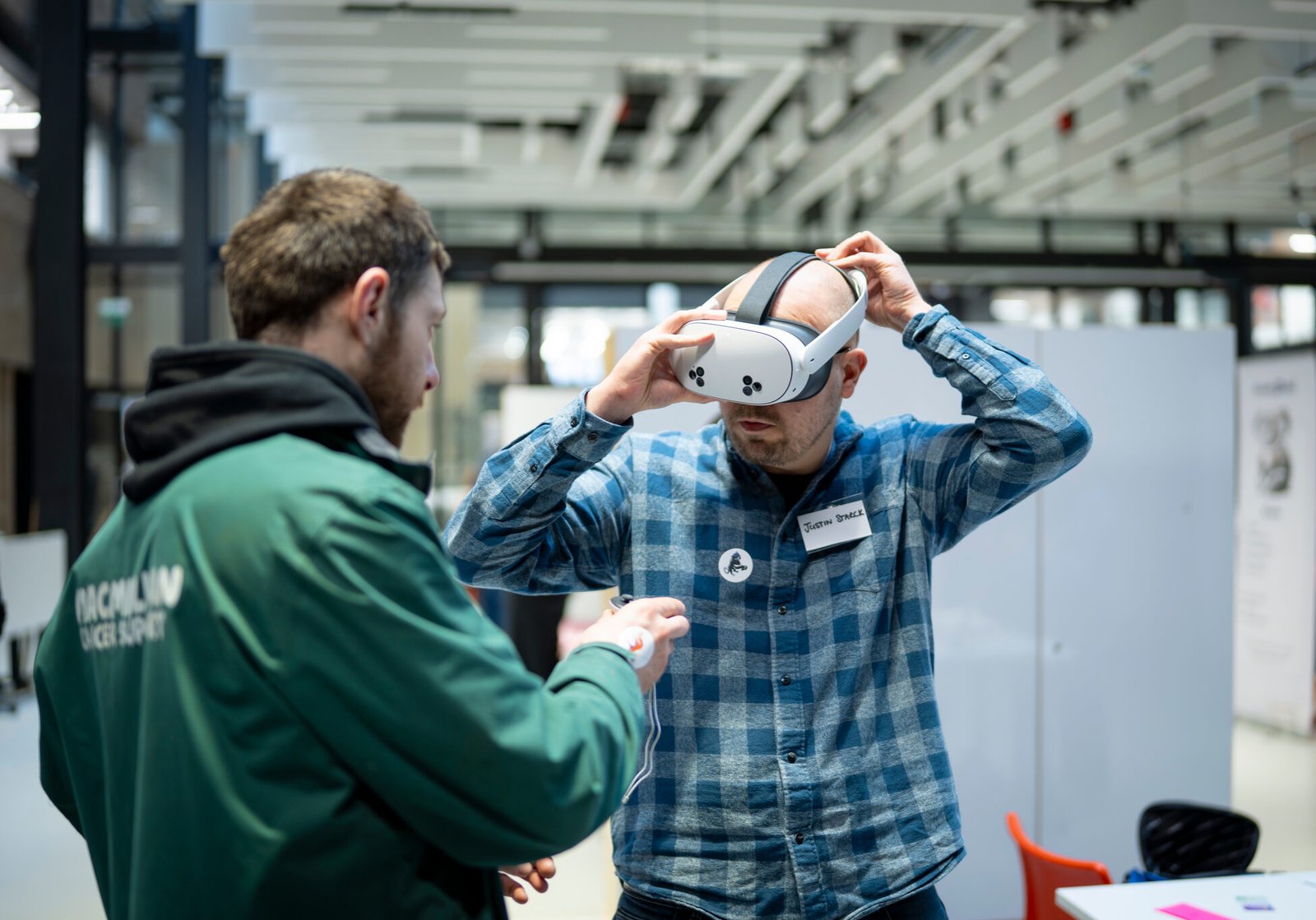
In an immersive virtual reality escape-room scenario, teams must communicate quickly, interpret incomplete information and make decisions together. There is no time to perfect a slide deck or wait for the usual decision-maker to take control. Participants reveal how they react when they are uncertain, challenged or competing for attention.
That is where the learning becomes specific. A facilitator can help the team examine what happened rather than rely on vague impressions. Who took charge? Who asked the questions that prevented an error? Did the group share information clearly, or did key details remain with individuals? When disagreement appeared, did the team explore it productively, avoid it or push through it?
A competitive element can sharpen the experience, but it needs careful framing. Healthy competition creates energy and exposes decision-making patterns. Too much emphasis on winning can encourage performative behaviour or leave people feeling judged. The challenge should serve the learning, not replace it. Teams need psychological safety to discuss what occurred honestly, including the moments that were frustrating or uncomfortable.
Design the activity around a real performance issue
Personality-based team building works best when it begins with a business question. “How do we improve collaboration?” is a useful ambition, but it is too broad to guide a session. A sharper question might be: why do handovers between departments fail, why are project decisions repeatedly delayed, or why does a leadership group avoid difficult challenge?
The answer determines the experience and the debrief. A cross-functional project team may need to practise sharing information across professional boundaries. A newly formed leadership team may need to understand how power, pace and challenge show up in its decisions. A department recovering from conflict may need a lower-risk way to rebuild trust before tackling the underlying issues directly.
Before the event, establish what good performance would look like afterwards. It could be clearer meeting roles, faster escalation of risks, more balanced participation or fewer misunderstandings during delivery. These outcomes keep the session connected to work rather than treating it as an enjoyable day away from it.
It also helps to consider the group’s context. A team in the middle of a sensitive restructure may need a different approach from a well-established sales group preparing for growth. Personality profiles can open valuable conversations, but they cannot resolve unresolved organisational decisions, workload pressure or unclear accountability on their own. Development is most effective when leaders are prepared to act on what the experience reveals.
Turn observations into behavioural agreements
The debrief is where an engaging activity becomes workplace development. Avoid generic questions such as “Did everyone enjoy it?” Instead, ask what the team noticed about communication, decision-making and inclusion. Encourage participants to connect actions to impact.
For example, a team may realise that its fastest speakers shaped the plan before others had processed the problem. The solution is not to silence confident contributors. It may be to build a short thinking pause into key decisions, assign someone to test assumptions, or ask each function to state its perspective before the group commits. Small design changes can improve participation without slowing the whole organisation down.
Useful behavioural agreements are visible and testable. A team might agree to name the decision owner at the start of a discussion, clarify whether a meeting is for input or commitment, or rotate who summarises actions. Where tension is common, colleagues can agree how they will raise challenge: direct, respectful and focused on the work rather than the person.
At Teams Glued, immersive challenge and behavioural preference modelling are brought together so teams can see these patterns in real time, then practise adapting their approach with a shared language. The learning is social, immediate and easier to remember because participants have experienced the consequences together.
Avoid the common traps
The biggest trap is treating a profile as a verdict. Statements such as “That is just my type” can quickly become a shield against feedback. Profiles describe preferences, not permissions. Every participant remains responsible for how their behaviour affects colleagues.
Another risk is over-interpreting the result. A single framework cannot capture a whole person, their expertise, culture, confidence or current workload. Use it as one source of insight alongside observation, conversation and performance data. It is particularly important not to use personality information to select people for roles, justify exclusion or make assumptions about potential.
Finally, do not let the learning end with the event. Managers should revisit the team’s agreements in regular meetings and ask what has changed in practice. A short check-in after two weeks can uncover whether people are genuinely flexing their styles or whether old patterns have quietly returned. Follow-up gives teams permission to keep experimenting rather than expecting instant perfection.
Make behavioural flexibility part of everyday work
The most effective teams are not those with identical personalities. They are teams that know how to use difference well. They can bring energy when action is needed, slow down when risk is high, challenge ideas without damaging relationships and include perspectives that would otherwise be missed.
That capability grows when people have a shared experience to reference. After a demanding challenge, “we are doing the escape room thing again” can become a useful shorthand for rushing ahead, holding back information or failing to ask for help. It is memorable, but more importantly, it makes the conversation easier to have.
Give your team an opportunity to notice its default patterns under pressure, then choose one behaviour to practise in the next real piece of work. Connect. Adapt. Lead. The change does not need to be dramatic to improve how people work together.
Book a demo
Could your team benefit from Teams Glued?