Workplace conflict resolution activities that work
A project handover is missed. One colleague says another was unclear; the other says nobody asked the right questions. By the next meeting, the conversation is no longer about the handover. It is about trust, status and who gets heard. Workplace conflict resolution activities give teams a safer way to surface those patterns before they become costly habits.
The point is not to make every disagreement feel comfortable. Healthy teams need challenge, contrasting views and constructive pressure. The work is helping people distinguish between productive conflict about a task and unproductive conflict that becomes personal, avoidant or political.
For HR and L&D leaders, the best activities do more than create a positive moment in the room. They reveal how people communicate under pressure, give colleagues language for behavioural differences and lead to agreements that can be used in real work.
Why conflict activities need more than good intentions
A conversation about conflict can quickly become abstract. People often know they should listen, show empathy and speak respectfully. That knowledge is rarely enough when deadlines tighten, roles overlap or a senior voice dominates the room.
Effective development creates a live, shared experience. Teams need to notice what happens when information is incomplete, decisions must be made quickly and different working preferences collide. One person may seek detail before acting; another may move fast to maintain momentum. Neither approach is automatically wrong. Conflict grows when each person assumes their approach is the only sensible one.
This is why the debrief matters as much as the activity itself. Without structured reflection, a team may enjoy an exercise but miss the behaviour it exposed. A skilled facilitator can turn comments such as “we were talking over each other” into useful questions: When does that happen at work? Who stops contributing? What will we do differently in our next decision meeting?
Workplace conflict resolution activities to use with purpose
The right activity depends on the level of trust, the nature of the friction and whether the team needs prevention, repair or a reset. Avoid forcing colleagues to disclose sensitive disputes in a group setting. If there is a formal grievance, bullying allegation or serious power imbalance, use appropriate HR processes and independent support rather than a team exercise.
1. The perspective swap
Choose a low-risk workplace scenario: a delayed deliverable, competing priorities or disagreement over quality standards. Split the group into pairs. Each person explains the situation from their own perspective for two minutes, then swaps and argues the other person’s case as accurately as possible.
The goal is not agreement. It is accuracy. Ask the listener to confirm whether their colleague has represented their concerns fairly before the discussion moves on. This slows down the instinct to rebut and builds the habit of checking understanding.
Use this where a team has begun assigning negative intent. It works less well when people are already highly defensive or when the scenario is too close to an unresolved personal issue. In those cases, begin with a fictional example and build confidence first.
2. The assumptions audit
Write a familiar source of tension on a board, such as “Marketing changes requests too late” or “Operations always blocks progress”. Ask the group to separate observable facts from interpretations. “The brief changed twice after sign-off” is an observation. “They do not respect our time” is an interpretation.
Then explore the assumptions underneath: What information might be missing? What pressure could the other team be responding to? What question should have been asked earlier?
This activity is especially useful for cross-functional groups. It replaces blame with curiosity without pretending that poor processes or missed commitments do not matter. The next step is practical: agree what information, decision rights or checkpoints would reduce the issue next time.
3. The communication constraints challenge
Give small groups a complex problem to solve with deliberate constraints. For example, one participant can see key information but cannot speak, another can speak only after everyone else has contributed, and a third must track time and decisions. The task could be a physical puzzle, a simulated customer problem or an immersive digital challenge.
The pressure reveals familiar patterns quickly. Who takes control? Who waits to be invited? Who repeats their point when they do not feel heard? Who asks for clarification rather than making assumptions?
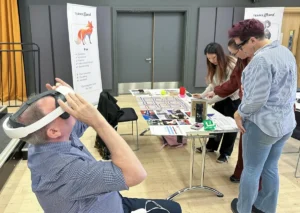
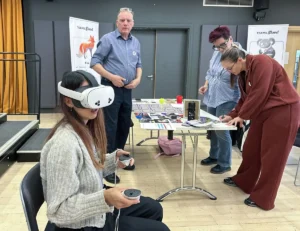
A VR escape-room challenge is particularly effective here because it gives people a neutral, engaging problem to solve together. Teams Glued uses immersive scenarios to make communication and decision-making visible in the moment, then connects the experience to behavioural preferences and workplace performance. The technology creates energy; the facilitated reflection creates the learning.
4. The conflict map
For a real but manageable team issue, map the conflict across four areas: the shared goal, each party’s needs, the points of disagreement and the behaviours that make progress harder. Keep the focus on work, not personality labels.
A leadership team, for instance, may share the goal of delivering a better service but disagree about speed, risk and resource allocation. Naming the trade-off makes the discussion more honest. It is easier to debate “how much assurance do we need before launch?” than “why are you always negative?”
Finish by agreeing two or three behavioural commitments. They should be observable: “We will state the decision required at the start of the meeting” is stronger than “We will communicate better.” Decide how the team will review those commitments after two weeks.
5. The repair conversation rehearsal
Many conflicts persist because people avoid the first difficult conversation. Rehearsal helps participants practise a clear structure before the stakes are high: describe the specific impact, ask for the other person’s view, identify what is needed and agree a next step.
Pairs can work with anonymised examples. One person practises opening the conversation; the other responds realistically, including some defensiveness. Swap roles, then offer feedback on clarity, tone and whether the speaker stayed with facts rather than accusation.
This is not about scripting people into artificial language. It is about giving them enough structure to remain constructive when emotions rise. Encourage directness with respect. Vague hints rarely resolve anything.
Make the debrief where performance improves
Activities only earn their place when they transfer into day-to-day work. Build the debrief around what the team saw, what it means and what happens next.
Start with evidence. Ask, “What did we actually do when the pressure increased?” This prevents the loudest interpretation from becoming the truth. Move to impact: “How did that affect the quality of our decision, the pace of the task or who contributed?” Finally, turn insight into action: “What will we test in our next project meeting?”
Behavioural preference models can add value at this stage, provided they are used thoughtfully. They should help people flex their style, not excuse it. A preference for pace does not justify cutting colleagues off. A preference for caution does not remove the need to make a decision. The productive question is, “What does this colleague need from me to contribute at their best?”
Design for psychological safety, not forced harmony
Conflict resolution activities can backfire if participants feel exposed, judged or pressured to reconcile before they are ready. Set clear boundaries at the start: challenge ideas and behaviours, avoid personal attacks, keep examples proportionate and respect confidentiality.
Leaders have a visible role. If a senior manager dismisses feedback, dominates the discussion or treats reflection as a soft add-on, the group will follow their lead. When leaders model curiosity and own their contribution to a pattern, permission is created for others to do the same.
It also helps to separate learning from performance management. A team session can identify recurring issues, but it should not become a public forum for handling individual capability concerns. Keep accountability clear, and take sensitive matters into the right process.
Turn insight into a team operating agreement
The most useful outcome is a short operating agreement the team can use when work becomes demanding. It might cover how decisions are made, how concerns are raised, when colleagues challenge a plan and what happens when a deadline is at risk.
Keep it specific enough to test. For example, a project team may agree that the meeting chair will invite dissent before finalising a decision, and that anyone changing a priority will explain the impact on other commitments. Review the agreement after a live milestone, not six months later when nobody remembers the context.
Conflict does not disappear when a team becomes effective. It becomes easier to name, safer to explore and faster to resolve. Give people a shared challenge, honest reflection and practical language to respond differently. That is how tension becomes useful energy for better work.


Book a demo
Could your team benefit from Teams Glued?