How to improve cross functional collaboration
A project can have capable people, a sensible plan and senior support, then still lose momentum at the handovers. Marketing waits for product. Product waits for data. Operations spots a delivery risk too late. To improve cross functional collaboration, organisations must address more than process. They need to make visible how people communicate, decide and respond when priorities collide.
This matters because cross-functional work is where strategy becomes real. It is also where different pressures meet. A finance lead may seek control, a commercial lead may push for pace, and an operational expert may need certainty before committing. None of these instincts is wrong. The performance issue begins when teams treat a different working style as resistance rather than useful information.
Why cross-functional collaboration breaks down
Most collaboration problems are not caused by a lack of goodwill. They are caused by unclear expectations and unspoken assumptions. Each function has its own language, measures of success and rhythm of work. Sales may judge progress by client momentum; delivery may judge it by capacity and quality; technology may judge it by risk, reliability and technical debt.
When these perspectives are not brought into the open, teams default to familiar patterns. The loudest voice can set the agenda. Decisions are revisited after meetings. Critical information stays within departments. People begin to protect their own priorities because they do not trust the wider group to protect them.
Hybrid working can intensify this. A quick clarification that once happened beside a desk becomes a message thread, then a delayed decision. Yet proximity is not the whole answer. Co-located teams can also work in silos if they have no shared purpose, no clear decision rights and no confidence in raising challenge.
The aim is not to remove healthy tension. Productive cross-functional teams use tension to test assumptions, expose risks and make better calls. The goal is to replace personal friction with constructive challenge.
Set one outcome that every function can own
Cross-functional work needs a result that is bigger than any one department’s target. Without it, people will understandably optimise for their own scorecard. A shared outcome gives the group a practical reason to make trade-offs together.
Make the outcome specific enough to guide decisions. “Improve the customer experience” is a useful ambition, but it will not settle a disagreement about scope, timing or budget. “Reduce customer onboarding time by 20 per cent without increasing service contacts” creates a clearer test. Teams can then ask which option best serves the agreed result.
This does not mean every function carries equal accountability for every task. It means every function understands how its choices affect the whole outcome. Start major initiatives with a short alignment session: define success, identify constraints, agree who decides what and name the dependencies most likely to slow progress.
Improve cross functional collaboration through clear decision rules
Many teams mistake attendance for alignment. A meeting full of stakeholders can still end with nobody knowing whether a decision was made, who owns the next move or when an issue should be escalated.
Clarify decision rights early. For each key decision, identify the accountable owner, the people whose expertise must be consulted and those who need to be informed. Keep this proportionate. A complex approval model creates another bottleneck; an informal model can leave important voices out. The right level depends on the risk, pace and consequences of the work.
Then make decisions visible. Record the choice, the rationale, the owner and the date it will be reviewed. This is especially valuable where teams are working with incomplete information. It prevents old debates reappearing and gives people permission to move forward without waiting for perfect certainty.
Leaders set the tone here. If senior people reopen settled decisions without new evidence, teams learn that accountability is optional. If they model clear, timely calls and explain the trade-offs, people gain confidence to do the same.
Build a shared rhythm, not more meetings
More meetings rarely repair poor collaboration. Better routines do. The strongest cross-functional groups create a predictable cadence for sharing information, solving problems and making decisions.
A short weekly check-in may be enough for a stable programme. A fast-moving launch may require brief daily coordination. The question is not how often the team meets, but whether every session has a distinct purpose. Do not use the same meeting to report status, design solutions, resolve conflict and seek approval. People leave tired, with the hard work postponed.
A practical rhythm might include a focused delivery check-in, a regular session for decisions and risks, and a retrospective at key milestones. Each creates space for a different type of conversation. Keep updates concise and use meeting time for the issues that require judgement, challenge or collaboration.
Pay attention to handovers too. A handover is not an email sent at 5pm. It is a mutual confirmation that the receiving team has the context, capacity and authority to act. Build in time for questions before the work changes hands.
Flex behavioural styles under pressure
Processes can create clarity, but they cannot make people listen. Cross-functional collaboration improves when people understand their own behavioural preferences and adapt their approach for colleagues with different needs.
One person may think aloud and decide quickly. Another may need time to assess evidence before responding. One may focus on relationships and team buy-in; another may move directly to the task. Under pressure, these differences become sharper. Fast communicators can appear dismissive. Detail-focused colleagues can seem obstructive. Direct challenge can be misread as conflict.
The answer is not asking everyone to work in the same way. It is developing behavioural flexibility. A decisive colleague can pause to invite evidence. A reflective colleague can signal what information is needed and when a response will come. A relationship-led manager can make room for candid disagreement. A detail-oriented specialist can connect risk to the commercial impact.
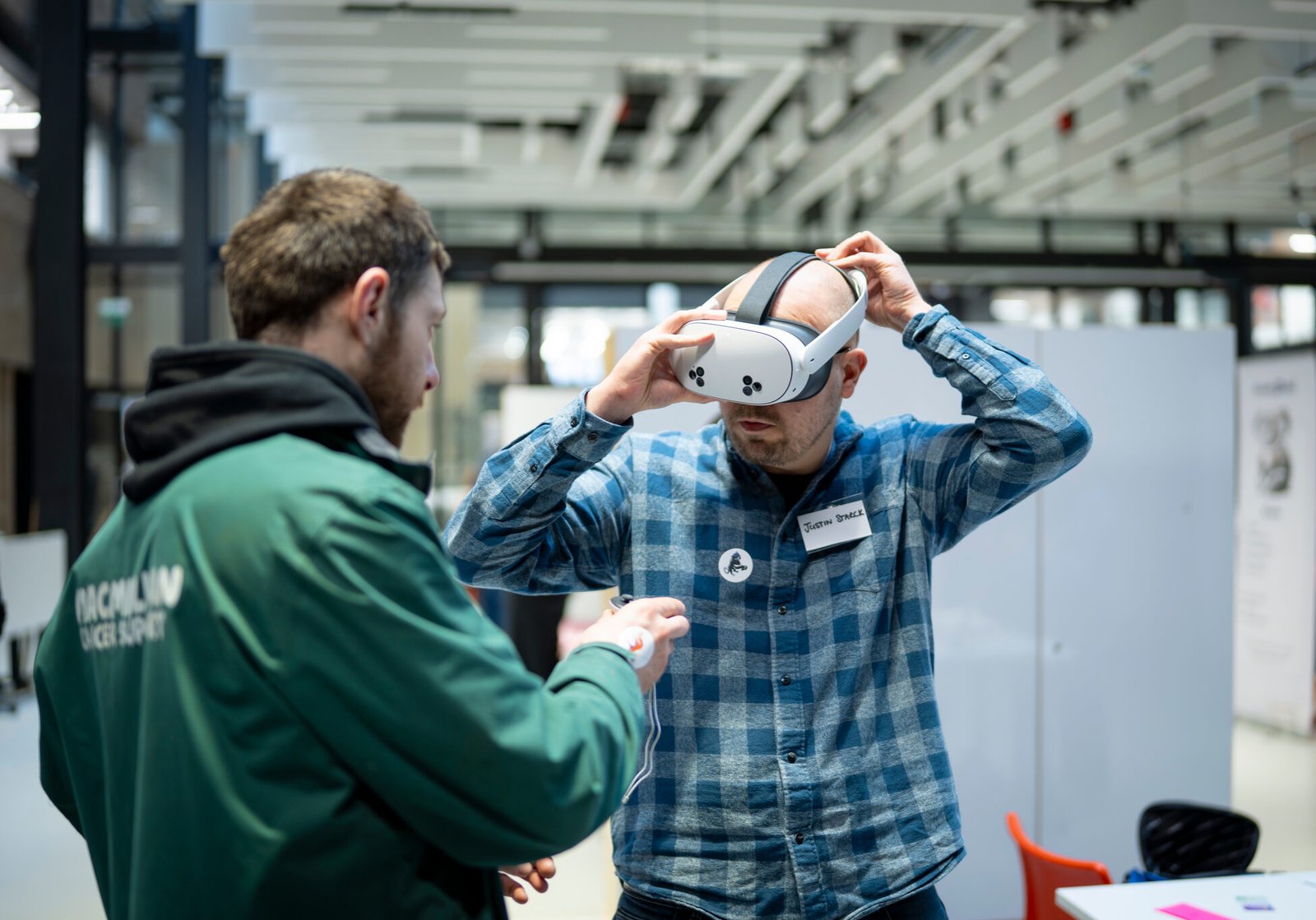
This is where experiential development has real value. When people face a shared challenge with a time limit, their habits become visible. Who takes control? Who holds back? Who clarifies the goal, tests assumptions or helps the group recover after an error? Structured reflection turns those observations into practical commitments for the workplace. Teams Glued uses immersive VR problem-solving to give teams that live evidence, then helps them translate it into stronger communication and decision-making.
Make constructive challenge a team habit
Teams often say they want honesty, but their reactions tell a different story. If challenge is met with defensiveness, people learn to soften concerns until they are too vague to help. Risks surface late and disagreements move into private conversations.
Create a few simple rules for challenge. Question the idea, not the person. Bring evidence or a clear concern. State the impact of a risk. Offer an alternative where possible. These habits make difficult conversations more useful because they focus attention on the work rather than status or personality.
Leaders should also ask for dissent before making a call. Try, “What have we missed?” or “What would make this fail?” Then acknowledge the contribution, even if the decision remains unchanged. Psychological safety is not agreement or endless debate. It is the confidence that people can raise a concern without being punished or dismissed.
Measure the quality of collaboration
If collaboration only appears in an annual engagement survey, leaders will see the problem too late. Look for operational signals: delayed handovers, repeated rework, decisions that drift, escalations caused by misunderstanding and projects that meet milestones but miss the intended benefit.
Combine these measures with direct feedback. Ask teams whether they understand shared priorities, know who makes decisions and feel able to challenge across functions. Use the answers to choose one or two behaviours to improve, rather than launching a broad culture initiative that nobody can translate into daily work.
Review progress after a defined period. Did decision time reduce? Are risks raised earlier? Have fewer issues been escalated? Are people involving the right colleagues sooner? Measurable change builds belief that collaboration is a performance discipline, not a vague aspiration.
Cross-functional collaboration gets stronger when teams practise it where the pressure is real: at the handover, in the disagreement and at the moment a difficult decision must be made. Give people a shared outcome, clear rules and the confidence to flex their style. Then create regular opportunities to notice what is happening between functions, name it honestly and choose a better response together.

Book a demo
Could your team benefit from Teams Glued?