Behavioural flexibility in the workplace
A project stalls at 4.30pm on a Friday. One colleague wants a quick decision and clear ownership. Another asks for more evidence. A third goes quiet because the conversation has become too forceful. Nobody is necessarily wrong, but the team is now working from competing instincts rather than a shared approach. This is where behavioural flexibility in the workplace makes a measurable difference.
Behavioural flexibility is the ability to recognise what a situation, task or colleague needs from you, then adapt your natural working style without losing your judgement or authenticity. It helps a direct communicator slow down and invite input. It helps a detail-focused colleague move a discussion towards action. It enables a relationship-led manager to set firmer expectations when performance requires it.
For organisations, this is not about asking people to become someone else. It is about giving teams a practical way to connect, adapt and lead when pressure exposes their default behaviours.
Why behavioural flexibility matters at work
Most workplace friction is not caused by poor intent. It comes from mismatched preferences. A fast-paced commercial lead may read careful questioning as resistance. A risk-aware specialist may interpret a rapid decision as carelessness. A team member who values harmony may avoid challenge altogether, leaving an issue unresolved until it becomes more costly.
When these patterns repeat, teams start attaching labels: difficult, indecisive, controlling, disengaged. Labels simplify a more useful truth: people often behave differently because they are trying to achieve safety, progress, quality or connection in the way that feels most natural to them.
Behavioural flexibility gives people another option. Instead of reacting to a style clash, they can ask: what is this person trying to protect or achieve, and what adjustment would help us move forward? That small shift changes the quality of the conversation.
The business consequences are significant. Flexible teams communicate more clearly across functions, make decisions with the right level of challenge, handle conflict earlier and maintain momentum when priorities change. They also reduce the drag created by unnecessary meetings, rework and passive disagreement.
Flexing style is not people-pleasing
There is a trade-off to manage. Adaptability becomes unhelpful when it means avoiding a necessary position, diluting expertise or constantly accommodating the loudest voice in the room. Behavioural flexibility is not agreement at any cost. It is purposeful adjustment in service of a better outcome.
A finance leader may need to flex from detail into brevity for an operational audience, but should not remove the essential risk from the message. A collaborative manager may need to become more decisive during an incident, but should still create space for the facts that could change the decision. The aim is range, not performance theatre.
Authenticity matters here. People can usually tell when a colleague is using a communication technique mechanically. The most effective adaptation starts with genuine curiosity: how can I make it easier for this person to contribute, understand and act?
The moments that test behavioural flexibility in the workplace
Flexibility matters most when the stakes feel high. Under pressure, people tend to rely more heavily on their default preferences. The decisive person becomes more controlling. The analytical person asks for more information. The accommodating person retreats. The energetic contributor fills every silence.
These behaviours can all be valuable. Problems arise when a team has only one response available.
During fast decisions
Not every decision deserves the same level of consultation. When timing is critical, teams need to be clear about who decides, what input is essential and when debate ends. Those who prefer consensus may need to accept a faster call. Those who prefer speed may need to pause long enough to hear the expertise that prevents an avoidable mistake.
In cross-functional work
Different functions often operate with different definitions of good work. Sales may value pace and customer responsiveness. Operations may prioritise reliability and process. Technical teams may focus on accuracy and long-term resilience. Behavioural flexibility helps people translate their point of view into language that matters to another function, rather than simply repeating it more loudly.
When conflict surfaces
Healthy conflict tests assumptions and improves decisions. Unhealthy conflict becomes personal, repetitive or evasive. A flexible response might mean a forthright colleague asks more questions before making their case. It might mean a conflict-avoidant colleague names the issue directly and respectfully. Both moves create more productive tension.
When teams are changing
New leadership, restructuring, growth and hybrid working can unsettle established habits. Some people want clarity immediately; others need time to process and test what is changing. Leaders who can flex their approach provide both direction and dialogue. They do not mistake silence for buy-in or urgency for understanding.
How teams build greater behavioural range
Awareness is the starting point, but awareness alone does not change behaviour. Teams need repeated opportunities to notice their preferences, test a different response and reflect on the impact.
Begin with a shared language for working styles. This could include how people prefer to communicate, make decisions, handle uncertainty, give feedback and respond to conflict. The purpose is not to place people in fixed boxes. It is to make invisible patterns discussable. When a team can say, “I need a few minutes to think before I commit” or “I am pushing for pace because the deadline is real”, they reduce guesswork.
Next, make behavioural adaptation specific. “Communicate better” is too vague to change anything. A project team may agree that, in key meetings, the person leading the discussion will invite the quietest relevant voice before closing a decision. A manager may commit to separating exploratory discussion from final sign-off. A detail-oriented specialist may send a short recommendation first, with the fuller analysis available behind it.
Feedback is essential, particularly when it is close to the moment. Ask colleagues what helped them engage and what made it harder. The question is not whether someone was nice or persuasive. It is whether their approach enabled the team to do better work.
Make the learning visible under pressure
Classroom discussion can create insight, but it does not always reveal what happens when time is short, information is incomplete and several people want control of the same problem. Teams need experiences that bring their habits to the surface safely.
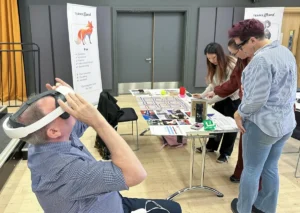
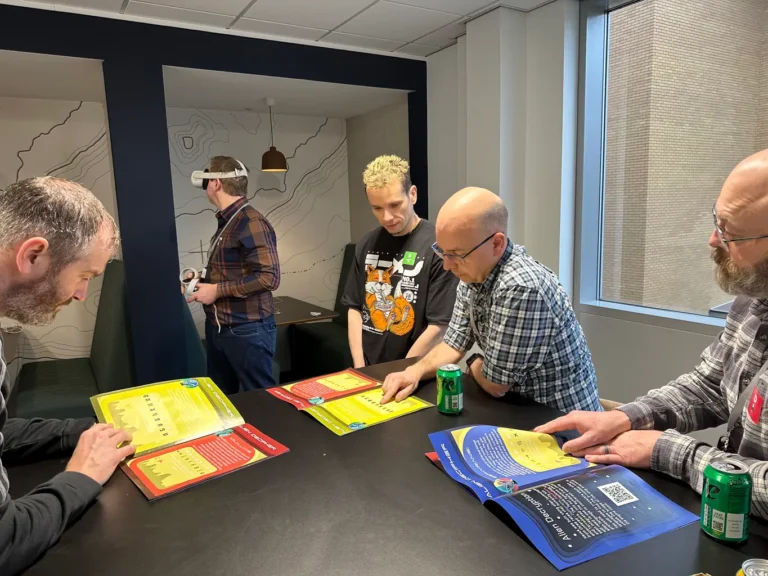
An immersive challenge can do this quickly. In a competitive VR escape-room scenario, teams must communicate, prioritise, solve problems and make decisions in real time. Someone may naturally take charge. Someone else may spot the detail everyone missed. Another person may hold back until they are actively invited in. These are not abstract personality descriptions. They are observable behaviours with immediate consequences.
The value comes in the structured reflection afterwards. What happened when the team became stuck? Whose input was heard? How did people react to challenge? Did the group balance pace with accuracy? Most importantly, where do the same patterns appear in meetings, projects and customer work?
This is why applied development has greater staying power than a one-off conversation about communication styles. It gives people a shared reference point, a common language and evidence that changing one behaviour can change the team result. Teams Glued uses this combination of immersive challenge, behavioural preference modelling and facilitated reflection to turn team activity into practical performance development.
What leaders can do differently
Leaders set the conditions for flexibility. If they reward only speed, people will stop raising risks. If they treat questions as challenge to their authority, thoughtful contributors will disengage. If they seek broad input but make unexplained decisions, trust falls.
A stronger approach is to be explicit about the behaviour the situation needs. Say when you want challenge, when you need a recommendation, when a decision is final and when the team is still exploring. Model adaptation yourself by changing your pace, level of detail or communication channel to suit the audience.
Leaders should also watch who has to do the adapting. In many teams, quieter people, newer colleagues or those outside the dominant function carry the burden of fitting in. Real flexibility is shared. The confident speaker learns to create space; the reflective thinker learns to contribute before the moment has passed; the manager ensures both are possible.
Turn insight into a team habit
The best time to discuss behavioural flexibility is not only after conflict. Build short reflection into existing work. At the end of a project meeting, ask what helped the group make progress and what got in the way. After a difficult decision, examine whether the team had enough challenge, enough evidence and enough clarity on ownership.
Keep the conversation practical. Focus on behaviours that can be seen and repeated, not assumptions about personality. Over time, teams become quicker at recognising a pattern before it hardens into friction.
A team with behavioural flexibility does not become quieter, softer or less ambitious. It becomes more capable of choosing the right response for the work in front of it. That is how teams protect relationships, improve performance and keep moving when the pressure rises.

Book a demo
Could your team benefit from Teams Glued?