How to measure team building effectiveness
A team can leave an escape-room challenge energised, laughing and convinced they have bonded. That is a positive moment, but it is not proof of improved performance. To understand how to measure team building effectiveness, look beyond enjoyment and assess what changes when people return to meetings, decisions, deadlines and disagreement.
The strongest evaluation connects a shared experience to observable workplace behaviour. Are people communicating earlier? Is conflict becoming more constructive? Do colleagues adapt their approach when working with different preferences? These are the shifts that turn team building from a good day out into a development intervention with commercial value.
Start with the business issue, not the activity
Measurement becomes much easier when the team-building programme begins with a defined performance need. A cross-functional project team may be missing handovers. A leadership group may avoid challenge until decisions have stalled. A newly formed department may be polite in meetings but unclear about who owns what.
Ask sponsors and participants what is currently getting in the way of effective work. Keep the question specific. “Improve collaboration” is a useful ambition, but “reduce rework caused by unclear decisions between sales and operations” gives you something to test.
Set one primary outcome and two or three supporting outcomes. For example, a team might focus on faster decision-making, while also tracking clarity of roles and confidence in raising concerns. Trying to measure everything creates a lengthy survey and weakens attention on what matters.
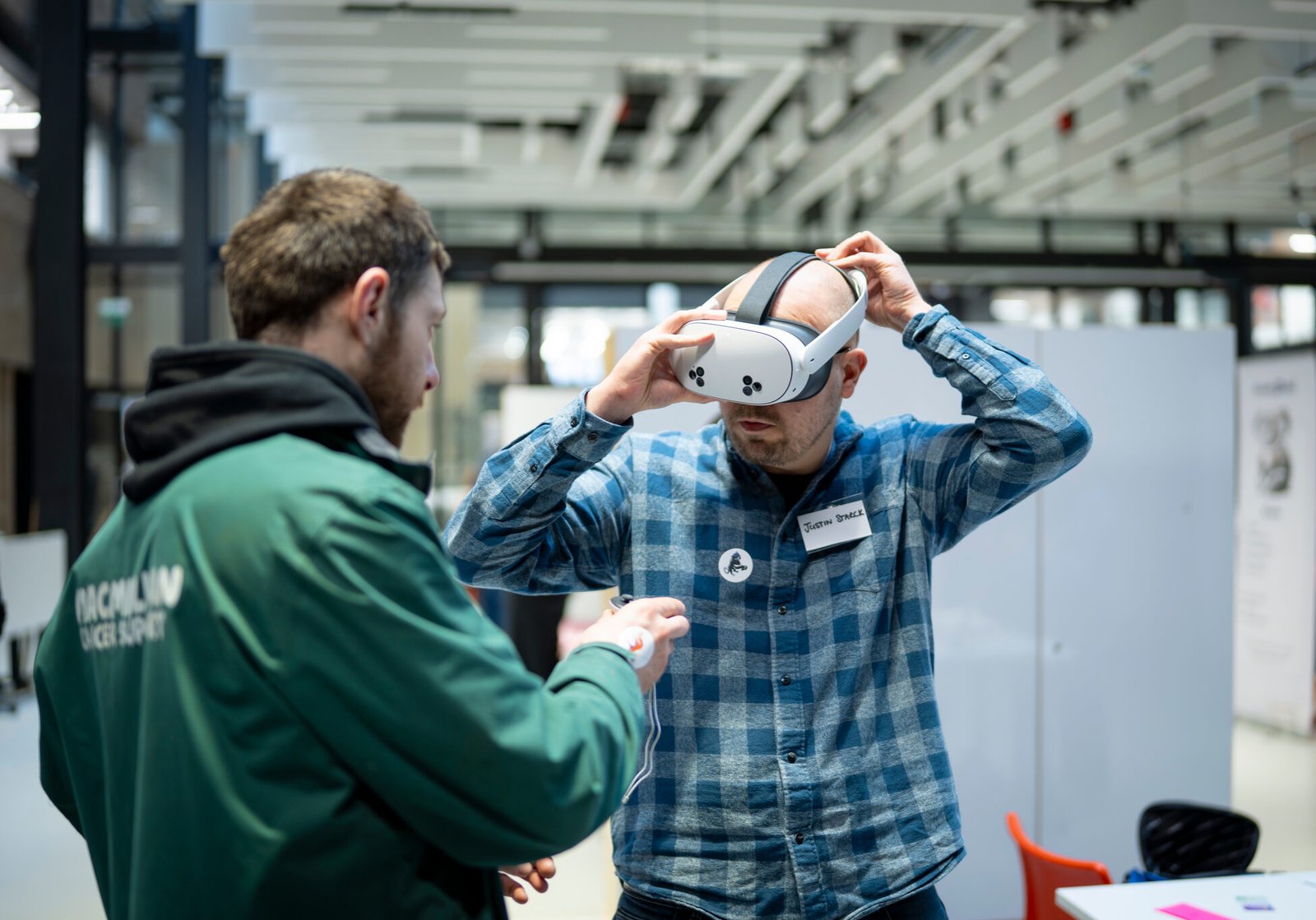
It also helps to distinguish between a team’s experience of the session and the result of the intervention. Participant enjoyment can support engagement and memory, particularly in an immersive VR challenge. It should be measured, but it belongs alongside evidence of learning, behaviour and work outcomes, not in place of it.
Build a baseline before the event
Without a starting point, post-event scores are simply opinions. Capture a baseline one or two weeks before the programme, while the team is operating in its normal environment.
A short pulse survey works well when it focuses on behaviours the group can recognise. Use a five-point scale and ask participants to rate statements such as: “We raise concerns early enough to prevent issues escalating”, “We understand how decisions are made in this team”, and “We adapt our communication for colleagues with different working styles.” Include an optional comment field to identify recurring friction.
Combine self-reporting with evidence from the people who lead or work alongside the group. A manager may be able to identify delayed approvals, repeated errors, missed project milestones or meeting habits that participants have normalised. Where possible, use existing operational data rather than creating a new reporting burden.
Baseline data does not need to be perfect. It needs to be relevant, consistent and proportionate to the intervention. A frontline team working through a clear communication problem may need a simple pulse survey and manager observation. A major leadership programme may justify deeper interviews, 360-degree feedback and project-performance data.
Measure what happens under pressure
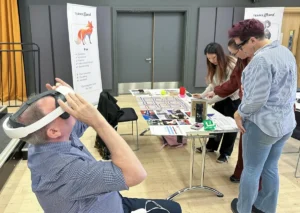
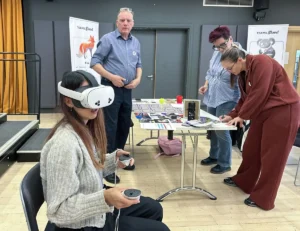
The live team-building experience provides a valuable source of behavioural evidence, especially when the task puts people under time pressure, requires interdependence and makes communication visible. In a competitive VR problem-solving scenario, teams cannot rely on presentation skills alone. They have to share information, allocate attention, make decisions and recover when their first plan fails.
Facilitators should observe against a small number of agreed behaviours rather than attempting to capture every interaction. Four measures are usually enough:
- How clearly the team shares critical information and checks understanding.
- Whether members involve quieter voices and use different expertise.
- How the group responds when plans fail, conflict appears or pressure rises.
- How quickly it agrees priorities, makes decisions and adjusts its approach.
These observations are not a pass-or-fail score. They create material for structured reflection. A team that wins the challenge through one forceful voice may still uncover a workplace risk: speed has been prioritised over challenge and inclusion. Another team may initially struggle but improve markedly once it changes how it communicates. That adaptation is often the more useful development signal.
Behavioural preference modelling adds depth when it is used carefully. It can give teams a language for recognising different needs around pace, detail, risk, influence or certainty. The aim is not to label people or excuse unhelpful conduct. The aim is to help colleagues flex behavioural styles, make better requests and avoid treating one preferred way of working as the only effective one.
Ask better questions after the session
An immediate post-event survey should be brief enough to complete while the experience is fresh. Ask whether participants understood the connection between the challenge and their day-to-day work, what behaviour they intend to change, and how confident they feel about doing so.
Avoid relying on a single question such as “Was the event useful?” It may produce a high satisfaction score while concealing a weak transfer to work. Add questions that test practical intent, for example whether the team has agreed a new communication habit, decision rule or way to handle disagreement.
Open responses matter here. Look for patterns in the language people use. If several participants mention that they need to clarify roles before acting, that is a stronger signal than a generic comment about teamwork. It also gives the manager a clear point to reinforce in the following weeks.
Check for behaviour change after 30 and 90 days
The real test starts once calendars fill up again. Re-run the same pulse survey after around 30 days and again at 90 days. Comparing the same questions reveals direction of travel, while comments explain why a score has moved or stayed flat.
At the 30-day point, focus on adoption. Has the team actually tried the agreed actions? It may have introduced a clearer meeting close, rotated who leads project updates, or created a rule that major decisions must include a named challenger. Small, visible habits are easier to sustain than broad promises to communicate better.
At 90 days, examine whether the habits are affecting performance. Depending on the original issue, useful indicators may include fewer missed handovers, reduced rework, shorter decision cycles, better delivery against milestones, fewer escalations or improved stakeholder feedback. Do not claim that team building caused every positive movement. Teams operate within wider systems, and changes in workload, leadership or process may also contribute. Instead, look for a credible relationship between the targeted behaviour and the operational result.
A manager check-in adds essential context. Ask what has changed in the way the team works when deadlines tighten, priorities conflict or opinions differ. These moments reveal far more than a friendly meeting held on a quiet week.
Turn findings into a team action plan
Measurement without follow-through can feel extractive. Share the results with the team, including where progress has been limited. A dip in confidence is not necessarily failure: it can mean people are becoming more honest about a problem they previously ignored.
Use the findings to agree one or two actions for the next quarter. Assign an owner, decide how progress will be noticed and make space to review it. For instance, if the evidence shows that decisions are repeatedly revisited, the team might record decision owners, rationale and review dates in every project meeting.
Leaders have a particular role in making this stick. If they invite challenge during a facilitated session but shut it down at work, the programme’s credibility disappears quickly. When leaders model curiosity, acknowledge contrasting preferences and ask for clarity before action, they turn the learning into everyday practice.
Teams Glued programmes are designed around this principle: immersive challenge creates honest behavioural data, and facilitated reflection converts it into practical change. The experience creates the shared reference point, but the team’s habits afterwards create the value.
The most useful measure is not whether people enjoyed the activity, although they should. It is whether, months later, the team can recognise pressure sooner, adapt how it works and perform with greater trust when the work gets difficult.
Book a demo
Could your team benefit from Teams Glued?