Team communication training that changes habits
A project can be on track on paper and still fail in the meeting room. One person withholds a concern, another pushes for speed, a third waits for clearer direction. By the time the team realises it is working to different assumptions, deadlines have slipped and trust has taken a knock. Effective team communication training changes what happens in those moments.
The goal is not to make everyone communicate in the same way. It is to help people recognise their natural style, understand what others need from them and flex their approach when the situation demands it. That is where communication becomes a performance capability rather than a soft skill discussed once a year.
Why communication friction costs more than time
Most workplace communication problems are not caused by a lack of channels. Teams have meetings, chat platforms, project boards and email. The problem is what happens within those channels when priorities compete, pressure rises or personalities clash.
A direct, fast-moving colleague may believe they are creating momentum. A more considered colleague may experience the same behaviour as dismissive or controlling. Someone who values harmony may avoid challenging an unrealistic plan, while another may interpret that silence as agreement. Neither response is necessarily wrong, but the gap between intention and impact creates friction.
Over time, that friction shows up in familiar ways: repeated work, unclear accountability, delayed decisions, meeting fatigue and conflict that surfaces too late. It also affects engagement. People contribute less when they do not feel heard, understood or confident that disagreement will be handled constructively.
For leaders, the commercial consequence is clear. Teams that cannot communicate well spend more energy managing confusion than solving the problem in front of them.
What strong team communication training develops
Useful development goes beyond teaching people to listen more carefully or use a feedback model. Those tools have value, but they only work when people can recognise their own behaviour in real time.
Strong training helps teams build three connected capabilities: awareness, adaptation and application.
Awareness of behavioural preferences
Every team contains different communication preferences. Some colleagues think aloud and decide quickly. Others need time to test assumptions before committing. Some focus naturally on relationships and consensus; others prioritise evidence, detail and delivery.
When these preferences are invisible, teams often label each other unfairly: too blunt, too slow, too emotional, too controlling, too vague. Behavioural awareness replaces judgement with useful insight. It gives people language to say, “I need five minutes to consider this,” or “Let’s be clear about the decision before we move on.”
This does not mean using personality profiles as an excuse. “That is just how I am” is not a development strategy. The value lies in identifying when a preferred style helps and when it limits the team.
Adaptation under pressure
Communication is easiest when the stakes are low. The real test arrives when a client changes scope, a deadline moves forward or colleagues disagree about the next step.
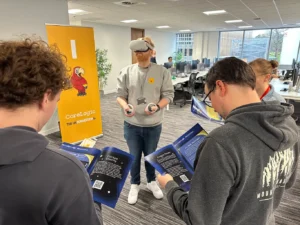
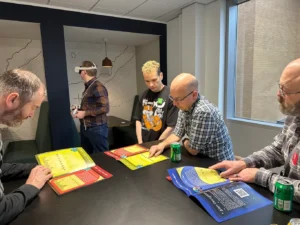
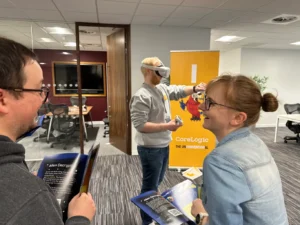
Training should give people a safe but demanding environment in which to experience those pressures. In an immersive problem-solving challenge, participants have to share information, decide quickly, manage different ideas and respond to setbacks. Their usual habits become visible because there is no time to hide behind polished corporate language.
That live experience creates a far stronger learning moment than a hypothetical scenario. A team can see exactly where it stopped listening, where one voice dominated, where it made assumptions or where it failed to check understanding.
Application to day-to-day work
Insight without a workplace action is interesting, not transformational. The final part of any programme should connect observed behaviours to the team’s actual operating rhythm.
That might mean agreeing how decisions are made in project meetings, setting clearer expectations for handovers or establishing a better way to challenge risk. A leadership group may need to create more space for constructive dissent. A cross-functional team may need a shared method for escalating blockers before they become urgent.
The best actions are specific enough to notice. “Communicate better” is too vague. “At the end of each planning meeting, confirm the owner, deadline and decision rationale” is a behaviour a team can practise immediately.
Why passive training rarely sticks
A slide deck can explain communication styles. It cannot show a project team how it behaves when the clock is running and information is incomplete.
Passive learning often creates recognition without retention. Participants may agree with the principles, enjoy a thoughtful discussion and then return to the same habits by Monday morning. This is especially likely when the training is disconnected from the team’s real relationships and working pressures.
Experiential learning creates a shared reference point. When a team has worked through a challenging scenario together, it can refer back to a specific moment: the point at which it rushed, split into silos or ignored the person holding critical information. That shared memory makes feedback less personal and more productive.
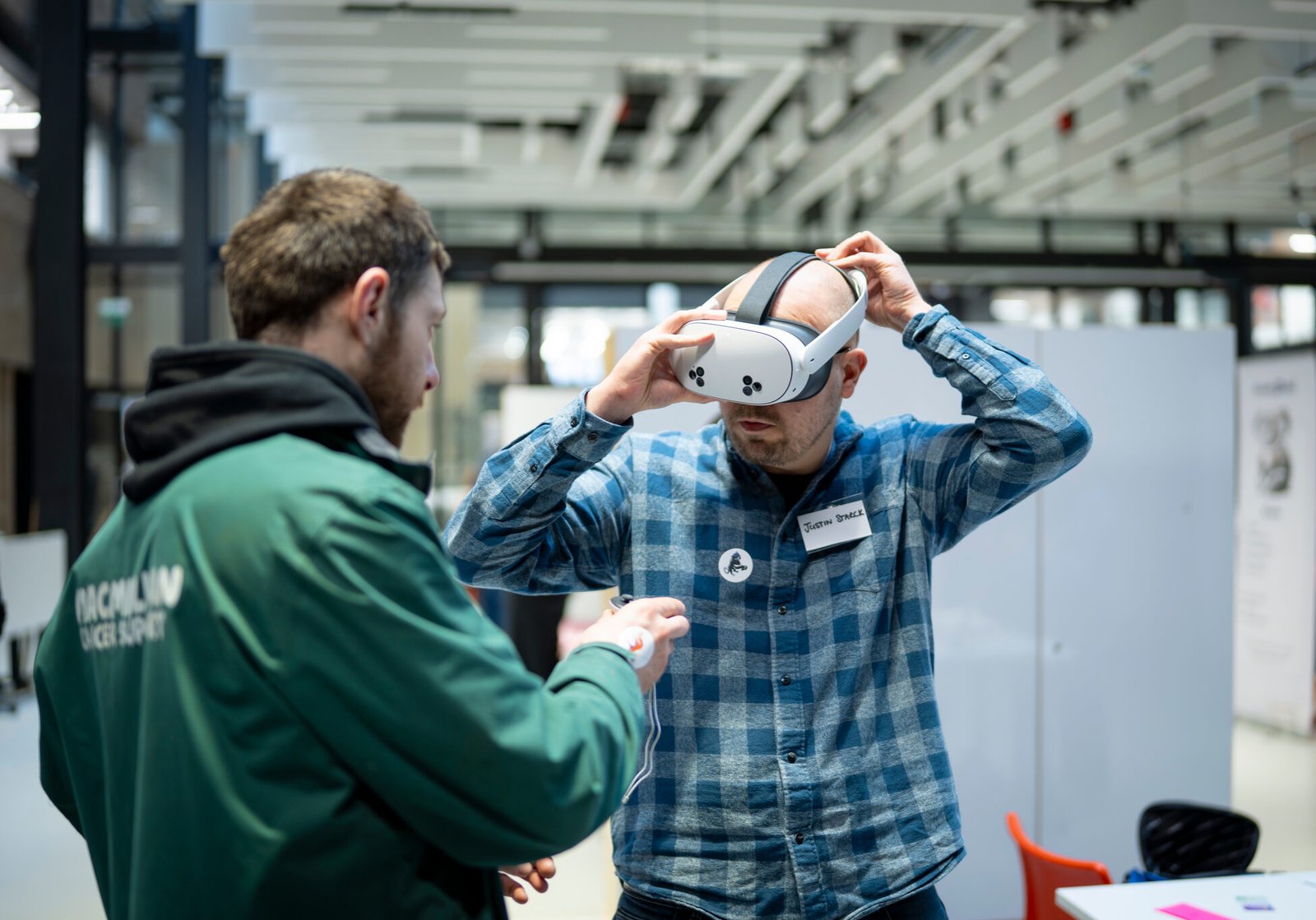
This is why facilitated VR experiences can be particularly effective for team development. The technology is not the outcome. It is the environment that makes behaviour visible, gives every participant a role and creates immediate material for structured reflection. Teams Glued uses this combination of immersive challenge and behavioural preference modelling to turn group activity into practical performance learning.
How to make communication training deliver workplace results
The format matters, but preparation and follow-through matter just as much. A lively session with no connection to business reality may boost energy without changing behaviour.
Start by defining the friction the team needs to address. Is the issue slow decision-making, tension between functions, poor feedback, unclear ownership or a lack of challenge? There may be several issues, but naming the primary one helps shape the conversation and the actions that follow.
Next, involve the team’s leader without making the session leader-led. Leaders set the tone by participating openly, acknowledging their own habits and responding well to feedback. If senior people treat communication development as something others need, participants will do the same.
During the session, create room for honest reflection. The facilitator’s role is to move the group beyond “that was fun” or “we need to listen more”. Ask what happened, why it happened, whose needs were missed and what the team will do differently in its next live piece of work.
Then protect the learning after the event. Build a short communication check into existing meetings. Review whether commitments are clear, whether quieter voices are contributing and whether disagreements are being addressed early. Small repeatable practices are more likely to stick than a long list of intentions.
The trade-off: speed, inclusion and clarity
Teams often assume better communication means more discussion. It does not. In fact, the right approach can make teams faster because people know how and when to contribute.
The trade-off depends on the work. In a fast operational incident, the team may need a clear decision-maker, concise updates and rapid escalation. In a strategic decision with long-term consequences, it may need broader challenge, more evidence and time for reflection. Problems arise when a team uses one communication style for every situation.
High-performing teams learn to switch gears. They know when speed is essential, when consultation improves the decision and when clarity matters more than consensus. They also know that inclusion is not simply giving everyone equal airtime. It is creating the conditions for the right information, expertise and challenge to reach the decision at the right time.
Signs your team needs a reset
Communication training is particularly valuable after a period of change: a new leadership structure, rapid growth, a merger, a difficult project or the arrival of new team members. It is also useful before those pressures peak.
Look for recurring patterns rather than one-off disagreements. Meetings that end without clear decisions, messages that are regularly misunderstood, conflict moving into private conversations, or the same people doing all the talking are practical signs that the team’s communication habits need attention.
Do not wait for a major breakdown. A focused development experience can give a capable team the language and confidence to correct small patterns before they become costly ones.
The next time your team faces a complex decision, pay attention to how it reaches the answer, not just whether the answer is right. That conversation will reveal the habits worth keeping, the behaviours worth flexing and the practical change that can make the next challenge easier to solve.

Book a demo
Could your team benefit from Teams Glued?