Experiential learning for employees that sticks
A team can sit through a polished workshop on communication, nod at the right moments and return to the same meeting habits the next morning. Experiential learning for employees changes that pattern by putting people into situations where their usual responses become visible. Under time pressure, uncertainty or competing priorities, teams do not discuss collaboration in theory. They practise it.
That distinction matters for organisations dealing with strained handovers, siloed decisions, slow project delivery or unresolved conflict. The issue is rarely a lack of good intentions. More often, people have not seen how their own working style affects others when the stakes feel real. A shared challenge creates that visibility, then turns it into a practical conversation about what to do differently at work.
Why experiential learning for employees works
Traditional training has a role. It can introduce frameworks, clarify expectations and give employees useful language. But knowledge alone does not reliably change behaviour. People need an opportunity to test their instincts, notice the effect and receive feedback while the experience is still fresh.
Experiential learning creates that sequence. Participants face a task, make decisions, respond to setbacks and work with colleagues whose preferences may differ sharply from their own. The activity gives facilitators and teams concrete evidence to work with: who moved quickly, who paused for detail, who brought others into the conversation, who withdrew, and how the group recovered when its first plan failed.
This is not about labelling one style as better than another. A fast decision-maker can create momentum; they can also leave useful information unheard. A detail-focused colleague may spot risk others miss; they may also slow progress when speed is needed. Better performance comes from recognising these patterns and flexing behavioural styles to suit the task and the people involved.
The strongest learning experiences make this practical. Rather than asking, “What type of person are you?”, they ask, “What does this team need from you when pressure rises?” That is where personal insight becomes team capability.
The experience must resemble the work
For learning to transfer, the challenge does not need to copy an employee’s job exactly. It does need to recreate meaningful conditions from working life: limited information, a shared goal, different viewpoints, time constraints and consequences for poor coordination.
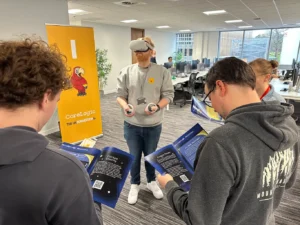
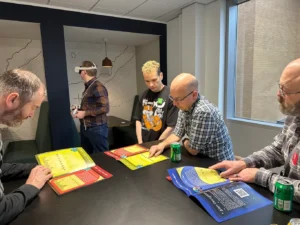
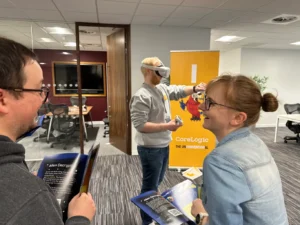
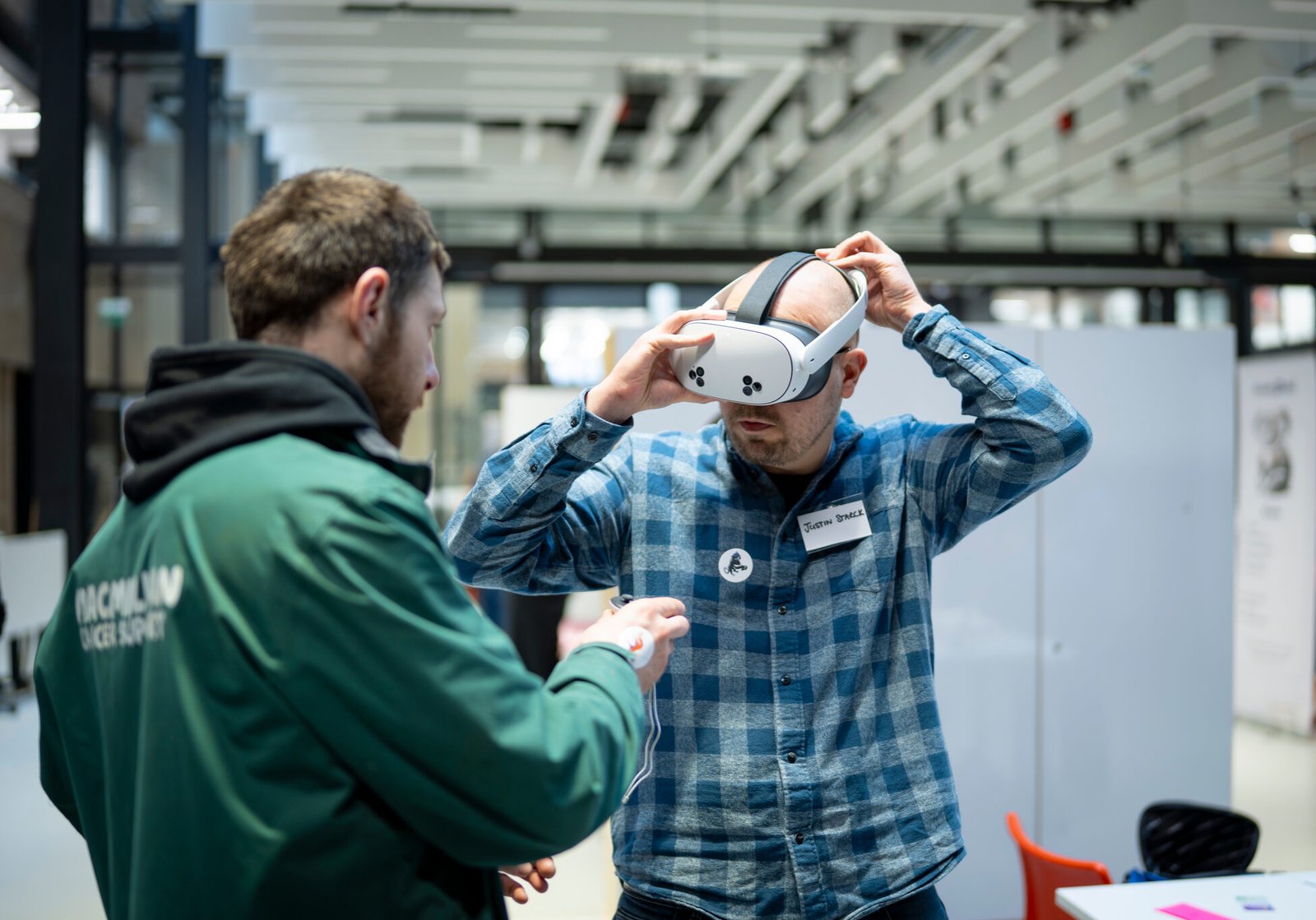
An immersive VR escape-room challenge is particularly effective because it makes these conditions immediate. Participants must communicate clearly, divide attention, solve problems and adjust plans in real time. The technology creates energy, but the business value sits in what the experience reveals about team behaviour.
A competitive element can sharpen focus, provided it is handled well. Healthy competition shows how teams organise themselves and respond to pressure. Poorly designed competition can encourage point-scoring or leave quieter participants behind. The facilitator’s job is to ensure the activity produces useful observation rather than simply rewarding the loudest voice or quickest answer.
The same principle applies to personality and behavioural preference models. They should open better conversations, not put people into fixed boxes. A model is valuable when it helps a colleague say, “I need a moment to process before deciding,” or “Please challenge me if I am moving too quickly.” It becomes unhelpful when it is used as an excuse for inflexibility.
Turn the activity into workplace action
The activity itself is only the starting point. Without structured reflection, even the most memorable event can become an enjoyable afternoon with little impact on Monday morning. Effective facilitation connects what happened in the room to the work employees need to do together.
A useful debrief starts with evidence. What did the team observe? Where did communication break down? Which decisions helped? When did the group adapt successfully? Keeping the conversation specific prevents reflection becoming vague or overly personal.
From there, teams can explore the behavioural patterns behind the outcome. Perhaps one function held information too long because it assumed another team did not need it. Perhaps a senior voice unintentionally closed down alternatives. Perhaps colleagues avoided challenge until the deadline forced a difficult conversation. These are recognisable workplace dynamics, made easier to discuss because everyone has just experienced them together.
The final step is commitment. Teams should leave with a small number of observable actions, not a long wish list. They might agree to state decision owners at the start of project meetings, invite challenge before finalising a plan, or use a clearer handover format between departments. Actions need an owner, a context and a review point. “Communicate better” is not a commitment. “At our weekly project meeting, we will confirm decisions, dependencies and next actions before we close” is.
Design for the challenge your team actually has
Experiential development works best when it addresses a real performance need. Before choosing an activity, clarify what is happening now and what better looks like. A leadership team that avoids healthy challenge requires a different intervention from a project group struggling with unclear roles.
Consider the moments where collaboration currently fails. Is it during prioritisation, when teams receive incomplete information, when tension appears between strong personalities, or when a deadline puts everyone under strain? These moments should shape the learning objectives and the debrief questions.
For cross-functional teams, focus on how people share context and balance local priorities with the wider goal. For new teams, the emphasis may be trust, role clarity and confidence to speak up. For established teams, a well-designed experience can surface assumptions that have become invisible through familiarity.
Group composition also matters. Mixing functions, seniority levels or behavioural preferences can create valuable insight, but it should be intentional. If a relationship is already fragile, facilitators need enough psychological safety for honest discussion without forcing disclosure. The aim is constructive challenge, not confrontation for its own sake.
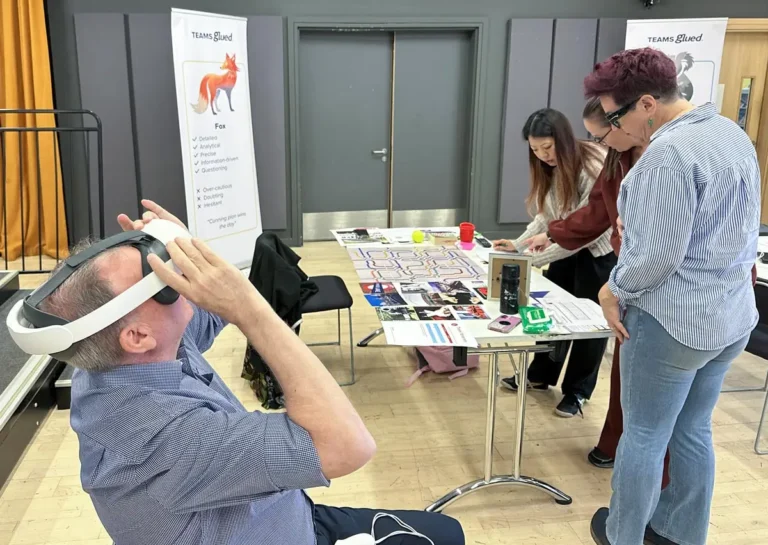
Teams Glued uses immersive problem-solving alongside behavioural preference insight for this reason: the shared experience creates a credible starting point for conversations that can otherwise feel abstract, defensive or difficult to begin.
Where experiential learning can fall short
Experiential learning is not a shortcut for every organisational issue. A single session will not fix unclear strategy, inadequate resources, inconsistent leadership or a culture that punishes employees for speaking honestly. If the system rewards the very behaviours a programme asks people to change, the system will usually win.
It also depends on follow-through. Managers should know what their teams have committed to and create opportunities to practise the new behaviours in real work. A short check-in after two weeks can be more valuable than an ambitious action plan that no one revisits.
Accessibility and inclusion require attention too. Not every employee will respond to competitive, highly sensory or technology-led activities in the same way. Give people clear information in advance, provide alternatives where needed and design participation so that contribution is not limited to those who are naturally confident or quick to speak. Inclusion is not an add-on. It directly affects the quality of the learning.
Measure behaviour, not just enjoyment
Participant feedback matters, particularly whether people found the experience relevant, engaging and safe enough for honest reflection. Yet enjoyment is not the same as impact. The better question is whether teams behave differently when the next real challenge arrives.
Start with a baseline where possible. This might include project delays caused by handover gaps, employee feedback on meeting quality, recurring conflict themes, stakeholder complaints or the time taken to make decisions. Choose measures that connect to the original problem rather than collecting data because it is easy to collect.
Then look for early behavioural indicators. Are meetings ending with clearer ownership? Are colleagues asking for alternative views before committing? Are project teams escalating risks earlier? Managers and participants can review these signals at 30, 60 and 90 days, adjusting the agreed actions when the work changes.
Not every outcome will fit neatly into a spreadsheet. A team that has gained a shared language for discussing pressure, pace and differing preferences may resolve tensions earlier and with less friction. That has real value, even when it is first noticed in the quality of everyday conversations.
A well-run experiential session gives employees a safe place to see themselves as others experience them. The opportunity afterwards is to carry that honesty into the next deadline, the next difficult meeting and the next decision that requires the team to connect, adapt and lead.
Book a demo
Could your team benefit from Teams Glued?