
Articles · Business
How do we get a new team working well, fast?
New teams can lose weeks working out how each other operates. You can shortcut that by making working styles visible early.
In short
- New teams start polite, then hit friction once real work and real pressure arrive.
- A shared, timed challenge brings out how people actually work, early and safely.
- A common language for working styles speeds up the awkward middle stage.
A new project team, a merged department, a newly hired group of managers: on paper they have everything they need. In practice, the first few weeks are spent working out who does what, who to go to for a decision, and why that one colleague always seems to slow things down. The faster a team gets through that stage, the sooner it starts delivering.
Why new teams stall
When people don’t know each other, they default to politeness. Nobody wants to tread on toes, so roles form by accident rather than by design. The person who talks first ends up leading. Quieter people hold back ideas. Assumptions about how decisions get made go unspoken until the first deadline, when they suddenly matter.
None of this is a sign of a bad team. It is a sign of a team that hasn’t yet seen how its members behave when it counts.
Get the real behaviours out early
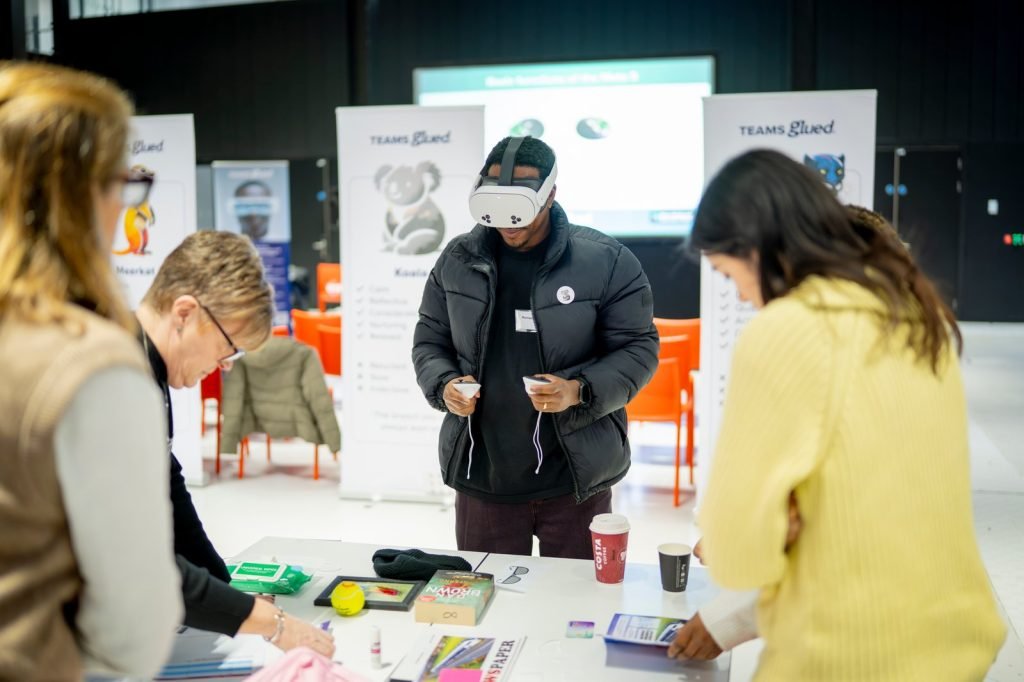
You can wait for the first real crisis to show you how the team works, or you can create a safe version of it. A short, timed challenge that needs everyone to contribute does the job well. Under a little pressure, people stop being polite and start being themselves: someone takes charge, someone checks the detail, someone keeps everyone included and someone suggests a completely different approach.
The point is not the challenge itself. It is the conversation afterwards about who did what, what helped and what got in the way.
What we saw at Core Logic
When Core Logic brought 50 mid-level managers together for a Teams Glued event, many hadn’t worked closely before. Facilitators watched initially hesitant participants find a place in their team, and some teams negotiate swapping roles to get a better result. In the follow-up survey, 73% said their team was able to form quickly and 80% said their team performed well.
What to try with a new team
- Share working preferences in week one. A short profile, or even a simple conversation about how each person likes to work, saves weeks of guessing.
- Set a short, timed challenge that needs everyone. Keep the stakes low and the clock visible.
- Debrief the roles, not the result. Who led? Who checked? Who held back, and why?
- Agree how you will make decisions. Write it down: who decides, who is consulted, and how fast.
How Teams Glued helps
The Train Challenge is built for exactly this moment. Each team shares one VR headset, so the person inside can only succeed if the people outside guide them. Roles, communication habits and decision-making styles show up in minutes. Our two-hour Away Day suits smaller new teams, and the Behavioural programme adds the Animal Profile beforehand so teams are formed from real differences.
More articles
Share this article
Know a team this would help? Share it on LinkedIn or send it to a colleague.
Bring Teams Glued to your team
Away Days, behavioural and leadership programmes for business and education.