
Articles · Education
How can students build the teamwork skills employers want?
Employers keep asking for collaboration and communication. Students rarely get to practise them in a way that feels real.
In short
- Group work isn’t the same as practising teamwork.
- Students need to see their own behaviour in a team, not just hear about it.
- Structured reflection turns an activity into something they can talk about at interview.
Ask any employer what they want from young people joining the workforce and teamwork, communication and problem-solving will be near the top of the list. Ask students how they have practised those skills and most will mention a group project, which often means one person doing most of the work. There is a gap between what employers want and what students get to experience.
Why group work isn’t enough
Group projects teach students to share a task. They don’t always teach them to notice how they behave in a team, how others see them, or how to adapt when the team isn’t working. Most of the learning happens by accident, if at all, and students rarely get structured feedback on the teamwork itself rather than the final product.
Learning by doing, under pressure
Real teamwork skills develop when students have to work together on something that matters in the moment, with a clock running and roles that aren’t assigned in advance. That is when natural behaviours show up: who takes charge, who checks the instructions, who keeps everyone included and who comes up with a different idea. With the right debrief, students can see those patterns in themselves and in each other.
What Coventry College did
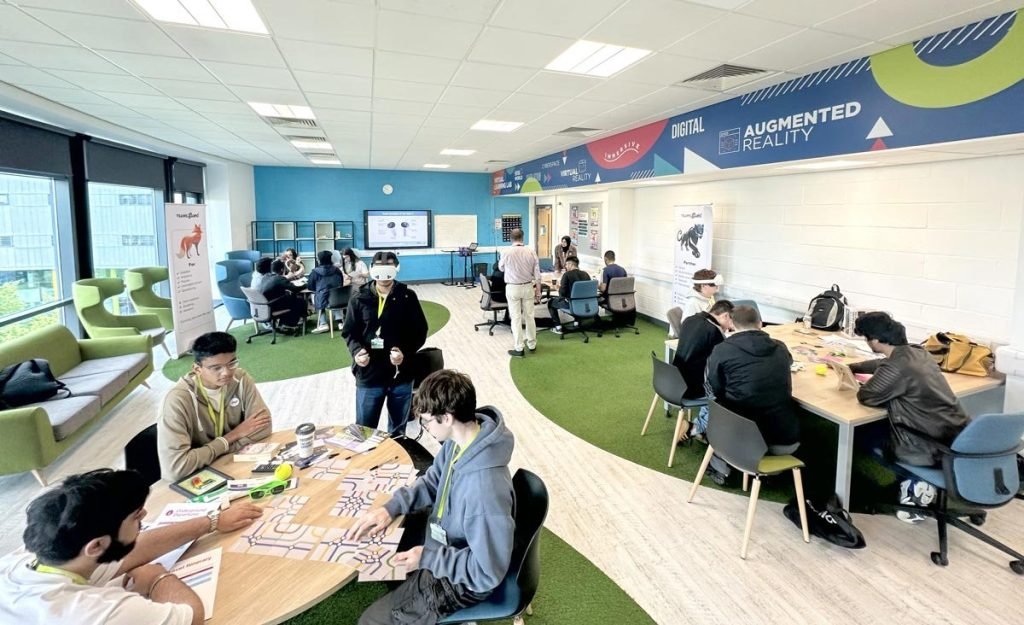
Coventry College wanted its BTEC Level 3 Computing students to build behavioural awareness alongside their technical skills. Teams Glued ran two half-day sessions for groups of around 20 students. Students were placed in mixed teams based on their behavioural profiles, took on a VR challenge together and then reflected on how their behaviours affected the outcome.
The college’s curriculum lead described the level of engagement as “exceptional”, and now plans to introduce the experience to all year groups earlier in the academic year.
What to try in your setting
- Mix groups on purpose. Put students with different working styles together, rather than letting friends pair up.
- Use short, timed challenges. Pressure brings out real behaviour much faster than a term-long project.
- Debrief the teamwork, not just the answer. Who led? Who listened? What would they do differently?
- Link it to careers. Ask students to turn what they noticed into an example they could use in an application or interview.
How Teams Glued helps
For student cohorts, we run the Behavioural programme as an employability session. Each student completes the Animal Profile, teams are formed from the profiles, and The Train Challenge gives them a shared VR task where one student wears the headset and the rest guide them. Facilitated reflection then helps students connect what happened to the skills employers ask for.
More articles
Share this article
Know a team this would help? Share it on LinkedIn or send it to a colleague.
Bring Teams Glued to your team
Away Days, behavioural and leadership programmes for business and education.