
Articles · Education
How can students learn to talk about their strengths at interview?
“I’m a team player” doesn’t stand out. Students who can describe how they work with others, with a real example, do.
In short
- Self-awareness gives students the words to describe their strengths.
- A real shared experience gives them an example to back it up.
- Guided reflection helps them connect the two in an interview answer.
“Tell me about a time you worked well in a team.” It is one of the most common interview questions for apprenticeships, jobs and university places, and one that many students find hard to answer. They often have very little work experience to draw on, and they have rarely been asked to think about how they behave with other people.
Why students struggle
Most students can describe what they have done: a project, a part-time job, a sports team. Far fewer can explain how they did it. What role did they naturally take? How did they handle disagreement? What did they learn about themselves? Without that self-awareness, answers end up generic, and generic answers don’t stand out.
Start with self-awareness
A simple working-style model gives students a vocabulary for their strengths. Using the four Teams Glued animals, a student might discover they are mostly Fox (careful, analytical, good at spotting problems) with a strong streak of Koala (supportive and good at keeping a group together). That is far more specific, and far more believable, than “I’m a hard worker and a team player”.
Turn an experience into an example
Self-awareness on its own isn’t enough. Interviewers want evidence. A shared team challenge gives students a memorable, concrete experience to talk about: the situation, the role they took, what they did when things went wrong and what the outcome was. With a little guided reflection afterwards, that becomes a ready-made interview answer.
What to try
- Give students a language for their style. A short profile or a simple discussion of working styles is a good start.
- Create a shared challenge. Something time-limited, where everyone has to contribute.
- Use reflection prompts. What role did you take? What did you notice about yourself? What would you do differently?
- Practise the answer. Run a mock interview question and ask students to use the challenge as their example.
How Teams Glued helps
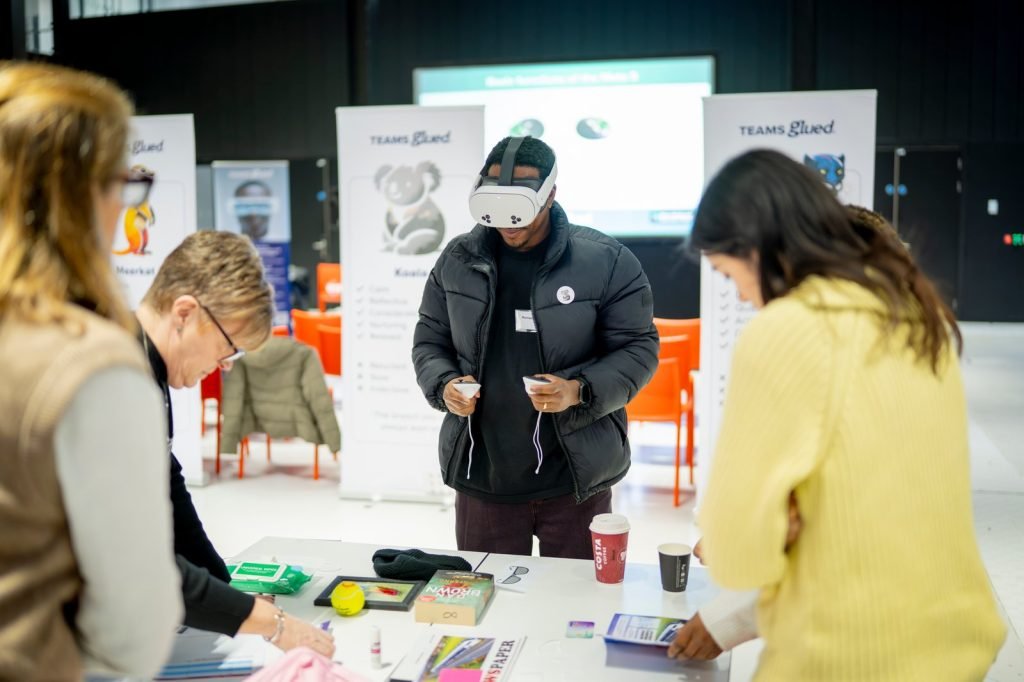
Every student who takes part in the Behavioural programme completes the Animal Profile and gets a PDF report showing their percentage mix of Panther, Koala, Meerkat and Fox. They then take on The Train Challenge in profile-based teams and reflect on their phones straight afterwards. They leave with both the language and the example they need for applications and interviews.
More articles
Share this article
Know a team this would help? Share it on LinkedIn or send it to a colleague.
Bring Teams Glued to your team
Away Days, behavioural and leadership programmes for business and education.