
Articles · Education
How do we help staff teams work better under pressure?
Inspections, exam season, budget pressures: education teams spend a lot of time under pressure. That is exactly when working styles collide.
In short
- Pressure exaggerates everyone’s natural working style.
- Teams that understand each other’s styles recover faster after a tough period.
- A shared language makes difficult conversations easier to start.
Schools and colleges are full of committed people working hard for the same goal. But when the pressure is on, even strong teams can start to pull in different directions. Small irritations grow, communication gets shorter and people retreat into their own way of doing things. It’s not a lack of goodwill. It’s what pressure does to every team.
What pressure does to working styles
Under pressure, people lean harder on their natural style. Using the four Teams Glued animals:
- Panthers push for decisions and can come across as abrupt.
- Koalas absorb other people’s stress and may not say when they are struggling.
- Meerkats jump between ideas and can unsettle colleagues who want a fixed plan.
- Foxes want more information and can seem to be slowing things down.
Each of these reactions makes sense from the inside. From the outside, they can look like rudeness, avoidance, chaos or obstruction. That is where the friction comes from.
Rehearse pressure safely
The best time to learn how your team behaves under pressure is not in the middle of an inspection. A safe, time-limited challenge lets staff see how they and their colleagues react when the clock is running, then talk about it openly with nothing at stake. That shared experience makes it much easier to name what is happening when the real pressure arrives.
What to try
- Agree decision rules in advance. Decide now who makes which calls during busy periods, so it isn’t argued out in the moment.
- Use a quick check-in. A two-minute round at the start of a pressured meeting helps people say how they are, not just what they are doing.
- Name the styles, not the people. “We need a bit more Fox here” is easier to hear than “you haven’t thought this through”.
- Debrief after peak periods. After exams or an inspection, ask what helped the team and what you would change next time.
How Teams Glued helps
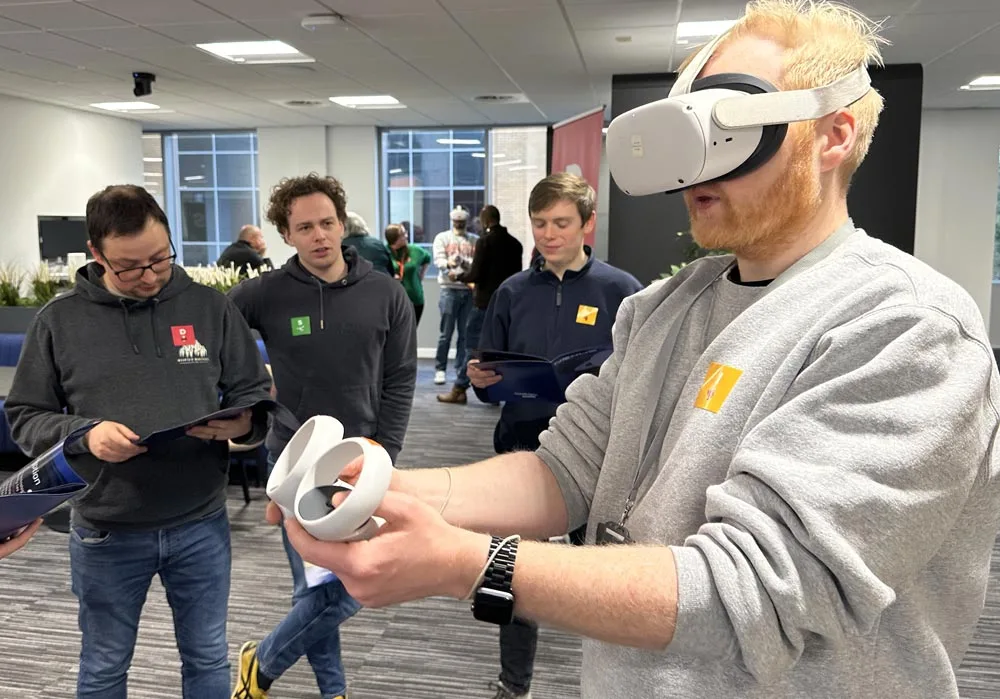
Teams Glued works well as part of a staff development or INSET day. The two-hour Away Day gives teams a shared challenge and a short wrap-up, while the half-day Behavioural programme adds the Animal Profile, profile-based teams and structured reflection. Either way, staff experience The Train Challenge together, with one person in the VR headset and the rest of the team guiding them against the clock.
More articles
Share this article
Know a team this would help? Share it on LinkedIn or send it to a colleague.
Bring Teams Glued to your team
Away Days, behavioural and leadership programmes for business and education.